




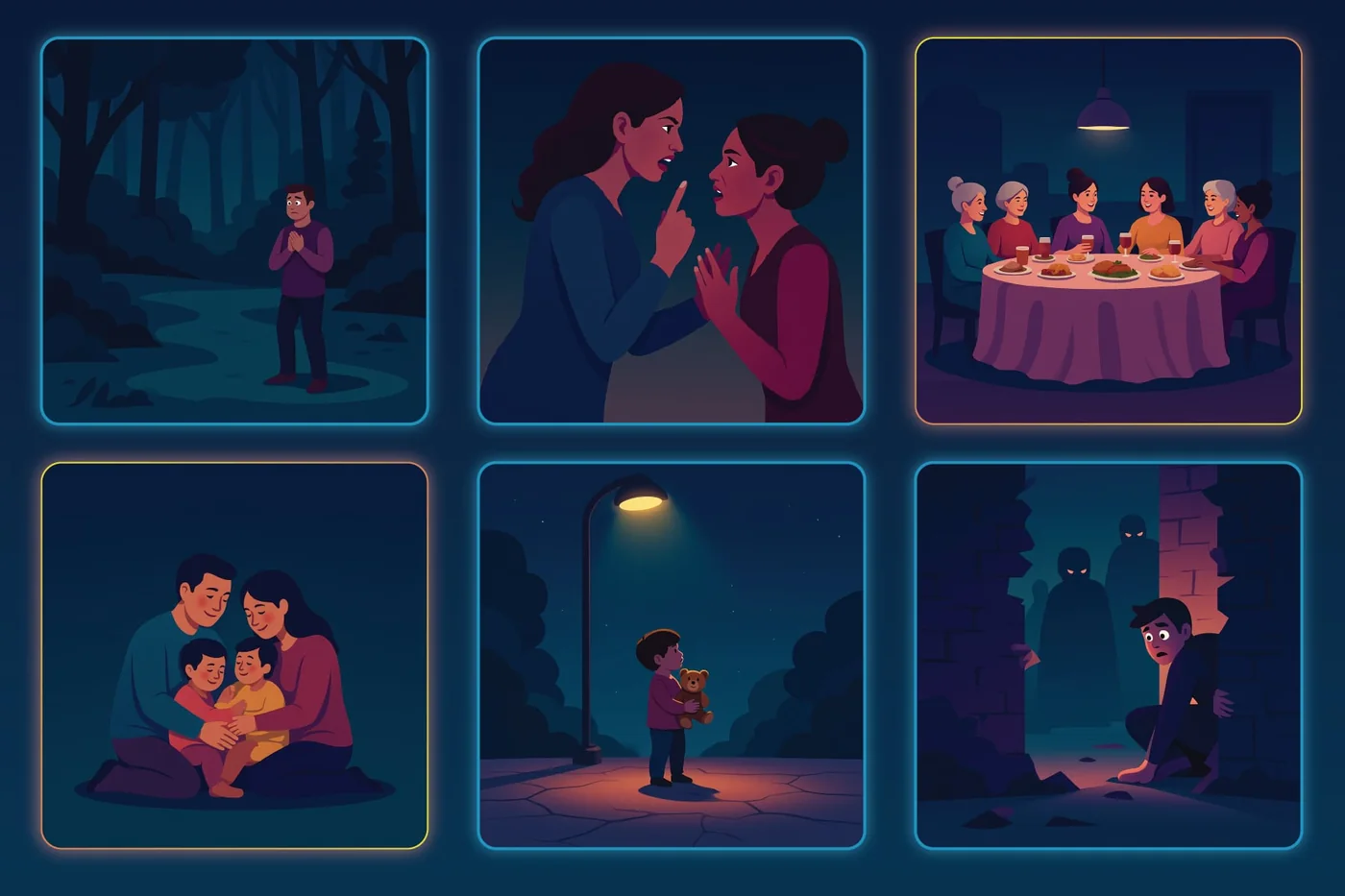

If you have been tracking your dreams for a few weeks, you might notice that you’re having more stressful, anxious, or emotionally intense dreams than positive ones. You are not alone. Many dreamers who start exploring dream interpretation and dream meanings experience the same thing. And though it may seem concerning, it’s not always worth worrying over. Here are a few good reasons your dreams are bringing up so many bad feelings, along with a few things you can do to encourage more positive dream experiences.
But First… A Caveat
Dreams can mirror emotional stress from waking life. In that way, they can be the canary in the coal mine of one’s mind. They can be the nudge we need to get us to seek out support and pay attention to our emotional wellbeing. So before we cover some of the very normal reasons negativity might be showing up as a dream trend, it’s important to remember that dreams can help us recognize when it may be time to ask for support or reflect more deeply on what we’re experiencing emotionally.
Frequent vivid nightmares that are disruptive to your daily living may be the result of (or symptom of) underlying health issues. If you are ever concerned about the frequency of negative emotions or the disturbing nature of nightmares, bring it to your therapist or a medical doctor as they can help you address any underlying stressors, causes or conditions.
Reason No. 1: It Is in the Nature of Dreaming Itself
According to dream researcher Dr. Ernest Hartmann, dreams put emotions into context so we can reflect on and learn from them. More specifically, they contextualize suppressed emotions. And more often than not, the ones we suppress are the difficult and negative ones. So dreams gather what’s floating around in your subconscious mind and use that to generate stories while we sleep. In many ways, dreams use emotional memories, dream symbols, and subconscious thoughts to create stories that help us process experiences while we sleep.
Reason No. 2: Bad Feelings Are More Memorable
The term negativity bias was coined by Dr. Rick Hanson; it means that negative experiences capture our attention more than neutral or positive ones. Bad feelings draw us in, and so do bad dreams. Dream tracking is one way to see your natural negativity bias at work. This is one reason emotionally negative dreams often feel more vivid and memorable than positive dreams, especially when keeping a dream journal or logging them in the myDream app.
Reason No. 3: Good Feelings Don’t Last
Conversely, good experiences don’t have a lot of power to keep our mental focus. Bad dreams draw us in, while good dreams encourage us to move on. In the world of dreams and tracking them, that means that we are less likely to take the time to record a positive dream because it doesn’t concern us. In other words, the meaning of joy is not as interesting as the meaning of fear. As a result, many people unintentionally build a dream history focused mostly on stressful or emotionally intense dreams rather than uplifting ones.
Reason No. 4: Negativity Is Everywhere
Even though dreams seem to be detached from reality, they are informed by and reflect aspects of the world around us. And the world around us is filled with marketing, social media messaging, and news stories that are meant to capture and keep our attention. What keeps our attention is negativity. Hence, dreams might be reflecting the negativity that we take in from the daily bombardment of messaging. What keeps our attention is negativity. The subconscious mind naturally absorbs emotionally charged information, and dream meanings often reflect the emotional themes we experience throughout daily life.
Reason No. 5: It’s a Phase
If you are going through a particular stage of growth or transition or struggle in waking life, it is almost certainly going to be reflected in your dream life with more negative content. Dreaming is a continuation of what you are working on mentally in waking life. In fact, dreams are very effective in helping you process the hardest stuff. Take this research study done in the 1990s (Cartwright, 1991; Cartwright et al., 1996), for example. Research has even suggested that vivid dream recall may help some people process difficult life experiences more effectively over time.
What You Can Do to Have Better Dreams
In order to shift the trend of emotions towards more positivity, try these simple steps.
Learn More About Dream Interpretation
First, read articles like this one that help you understand your dreams. Learning more about dream interpretation, dream symbols, and subconscious patterns can help you approach dreams with more curiosity and self-awareness. Taking an interest in learning can point your dreaming mind towards curiosity and wonder and encourage more awe in your dreams.
Record More Emotional Nuance
Spend a few extra minutes when recording a dream to ensure that you record all emotions, not just the strongest ones. See if there are subtle emotions beyond the big one or two that come to mind right away, like relief or intrigue. Adding more emotional nuance to your dream recording can show you the good things you might otherwise miss. Capturing emotional nuance in a dream journal or dream tracking app can help reveal positive emotions and patterns you may otherwise overlook.
Address Stress in Waking Life
Deal with waking life issues when they arise and face problems head on to keep them out of reach of your dreaming mind. Make time in your life to talk about difficult emotions, stressors, and things that keep you up at night. Staying aware of what’s on your own mind and talking with trusted people in your life can help you maintain a healthy dream life that is a balanced reflection of typical ups and downs.
Keep Recording Your Dreams
Keep up the habit of recording dreams each morning. Even noting that in the myDream app that you don’t have a dream to record is part of the habit. Training your mind to include dream recall as part of your daily routine will help you notice less vivid dreams and sometimes those are the more pleasant ones. Building a consistent dream recall habit can help you notice a wider range of dreams, including emotionally positive or more peaceful dream experiences.
Keep Calm and Dream On
Don’t let negative dreams alarm you. Negative emotions in dreams are normal. Most of the time they are a healthy part of processing our lives. If you’re seeing a lot more negativity in your dreams than you’re used to seeing, make note of it and reflect on how it might be expressing something you’re not already paying attention to. If it concerns you further, speak about it with someone you trust to be supportive.
The way to encourage more positive dream experiences is to keep learning, keep practicing dreamwork (the art of looking for and reflecting on the meaning in your dreams), take time to note more of the emotions beyond the strongest ones in a dream, and when good dreams come along don’t let them slip by unnoticed. Dream interpretation and dream tracking can help you better understand recurring dream themes, emotional patterns, and the messages your subconscious mind may be expressing. Record positive dreams just as intentionally as difficult ones so you can build a more balanced understanding of your dream life.
Your dream life has the potential to bring to light what’s bothering you but it also has the chance to inspire you to see more positivity, too. Your dreams can reveal both emotional struggles and moments of insight, creativity, hope, and personal growth. Focusing on both can help you live a more vibrant, well-adjusted life. Sweet dreams!