




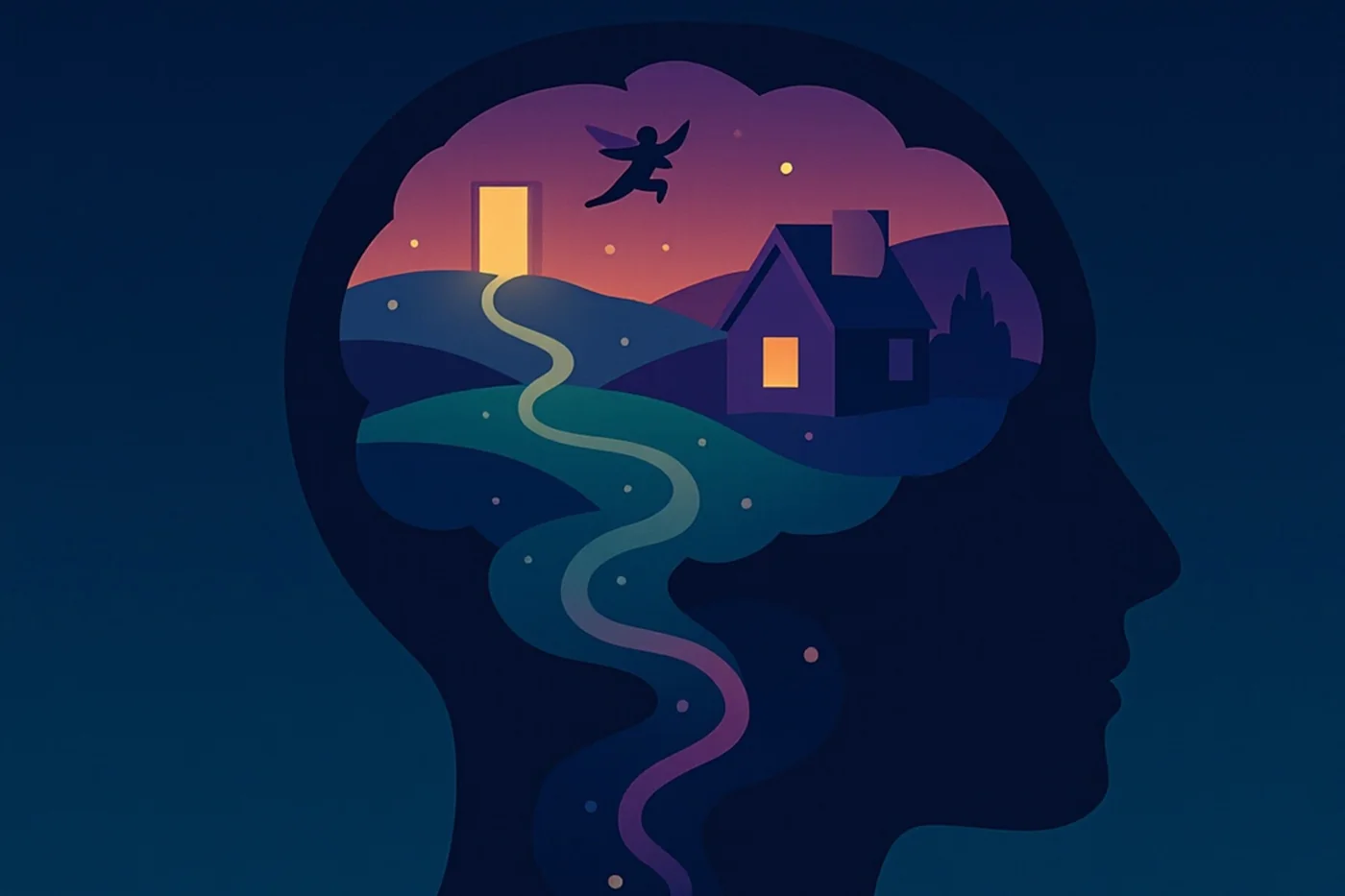

When the brain dreams, it becomes highly active—almost as active as when you're awake—though the way it processes information shifts dramatically. Let's explore what's really happening when your mind enters the mysterious world of dreams.
REM Sleep Activation: The most vivid dreams happen during REM (Rapid Eye Movement) sleep, when your brain sparks with electrical activity. During this phase, the different areas of the brain have specific functions. The brainstem, which connects the brain to the spine, is triggered during sleep activation. Its function is to keep the body safe, which is why it is necessary for the body to be in a non-active state while the dream itself is VERY active.
Emotional and Visual Centers Light Up: The amygdala—the brain's emotional hub—and the visual cortex come alive, flooding your dreams with powerful feelings and striking imagery. This is why dreams can feel so real, even when they're fantastical or surreal.
Logic Centers Quiet Down: At the same time, your brain's logic center—the prefrontal cortex—takes a back seat. With reasoning and self-awareness dimmed, your imagination runs free. This is why dreams can feel strange or illogical: your critical mind isn't editing, questioning, or censoring them.
Memory Reprocessing: Behind the scenes, your hippocampus, which is the part of your brain that forms new memories, and the neocortex (the part of your brain that has a higher function) work together to replay and organize experiences—like an overnight editor weaving yesterday's memories into your long-term story. This reprocessing boosts creativity, learning, and emotional healing.
Understanding the Brain's Key Chemicals
Serotonin helps stabilize mood, improve sleep quality, and promote a sense of calm and well-being. When serotonin dips during REM sleep, your emotional brain takes the lead, helping you process feelings that might stay buried while awake.
Norepinephrine is also a neurotransmitter and a hormone. It fuels alertness and the body's fight-or-flight response. Its drop during REM sleep lets your mind safely explore emotional themes without triggering panic, turning fear into symbolic storytelling.
Meanwhile, acetylcholine rises. It is another vital neurotransmitter that regulates the nervous system, regulates muscle contraction, and increases cognitive processes.
As scientists uncover the brain chemistry behind dreams, it's clear that each night is a blend of biology and meaning. Through the myDream app you can bridge that gap by combining science, symbolism, and AI-powered insight to help you understand what your dreams might be telling you.
Neurochemical Changes: As you dream, your brain's chemistry transforms. Levels of serotonin and norepinephrine—linked to alertness and rational thought—drop, while acetylcholine surges. This neurotransmitter plays a key role in memory formation and attention, and during sleep, it heightens imagination, emotion, and symbolic association. This chemical dance fuels the surreal landscapes of your dreams.
Why We Dream: Leading Theories
Activation-Synthesis Theory (Hobson & McCarley, 1977): This theory suggests that dreams may be your brain's creative attempt to make sense of random electrical signals during REM sleep, as your mind weaves chaos into meaning.
Matthew Walker, M.D., a professor of psychology and neuroscience at UC Berkeley, suggests that dreams serve as an "emotional first aid." According to Walker, "The evidence points toward an important function of dreams: to help us take the sting out of our difficult daily emotional experiences during the hours we sleep, so that we can learn from them and carry on with our lives." (Walker, 2018.) Dreams allow the brain to incorporate emotional concerns and significant people from our waking lives into a creative space where past and present knowledge can be melded together.
Memory Consolidation Theory: This theory proposes that dreaming may strengthen memory, linking new experiences with old knowledge and clearing out the emotional clutter in your brain.
Emotional Regulation Theory: In this theory, dreams act as emotional therapy sessions, helping you process stress, grief, or anxiety through symbolism and feeling.
Predictive Processing Theory: This newer approach suggests your brain may use dreams to "test-run" reality, predicting outcomes and strengthening problem-solving skills.
Threat Simulation Theory: Some scientists believe dreams evolved as mental simulations to prepare us for challenges, rehearsing survival instincts in a safe space.
Why Dreaming Matters: Scientists have found that dreaming plays several important roles in keeping us balanced. Each night, as you dream, your mind reorganizes experiences, explores new possibilities, and helps regulate emotional responses as your body rests and recharges.
Even with growing scientific insight, dreams still hold an element of mystery, but they are not random. Dreams are one of the brain's natural ways of processing emotional material, integrating learning, and supporting psychological healing. They allow unfinished experiences, unexpressed feelings, and emerging insights to surface in symbolic form, where they can be safely explored and gradually understood.
In this way, dreaming is not just something that happens during sleep. It is an ongoing process of renewal. Paying attention to dreams offers a window into how your mind is working to restore balance, gain insight, and support growth over time.