




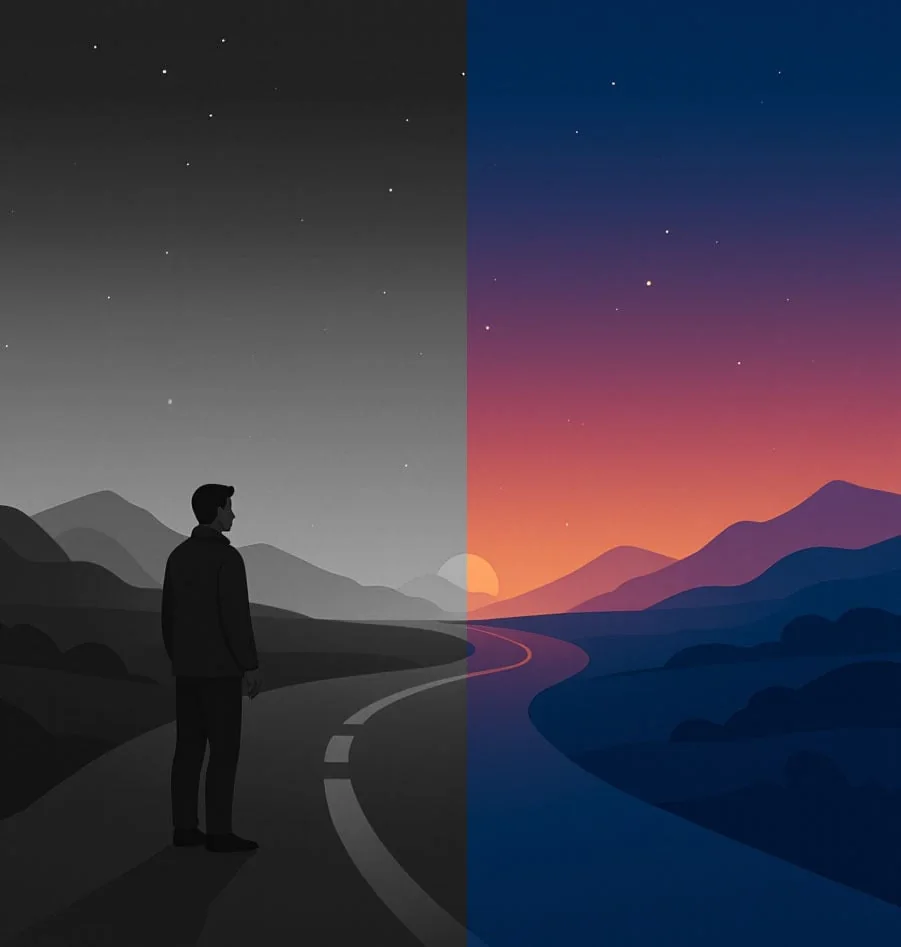

Scientists and psychologists have explored this question for decades, intrigued by why our dream experiences can look so different from one person to the next. While there's no single explanation, research suggests several key factors that help explain why some people dream in vivid color, while others recall dreams in black-and-white or softer, muted tones.
1. Brain Processing and Memory
Dreams draw heavily on visual memory. People who naturally recall details vividly — such as colors, textures, and emotional cues — are more likely to experience dreams in color. Those who focus less on color in waking life may not encode those details as strongly, causing their dreams to appear more like black-and-white images or faded sketches. Tracking dream details over time, including color, can help reveal how the brain processes and stores dream imagery.
2. Influence of Media Exposure
Studies have shown that people who grew up watching black-and-white television (especially before the 1960s) were more likely to report black-and-white dreams. As color television and digital media became more common, reports of color dreams increased significantly. This suggests that our waking visual environment plays an important role in shaping dream imagery and the way dreams are remembered.
3. Dream Recall Differences
Many people probably do dream in color but simply remember their dreams in less detail. When dream recall is poor, the color dimension is often the first to fade, much like trying to recall a faint memory or an old photo.
4. Neurological and Perceptual Factors
Research also suggests that neurological differences may influence how vividly dreams are experienced. Variations in visual cortex activity or levels of dopamine — a neurotransmitter involved in mood, pleasure, and motivation — may affect how colorful or intense dreams appear. Additionally, people with visual differences, such as color blindness or certain visual impairments, may experience dream imagery in unique ways.
Most people dream in color at least some of the time, but how those dreams are perceived or remembered depends on brain chemistry, memory habits, and even cultural or media influences. This is where the myDream app can be especially helpful. By allowing you to track details like colors and how you experience them in your dreams over time, it supports deeper insight into how your dreams communicate meaning.
Ways to Become Aware of Dreaming in Color
Becoming aware of color in your dreams often begins with gentle attention rather than effort. Simple practices before sleep and upon waking can help train your mind to notice and remember visual details more clearly.
Evening intention (prior to sleep) As you prepare for sleep, sit quietly for a moment and take three slow, deep breaths. Then say to yourself: "Tonight, I open my mind to the colors of my dreams. I will remember the shades, the hues, and the feelings they activate." Setting this intention helps prime your awareness before dreaming begins.
Morning recall When you wake, remain still with your eyes closed and allow the dream to surface naturally. Then gently ask yourself: What did I see first? Was there an overall tone—warm or cool, bright or dim? Did any object, sky, or clothing stand out with a specific color? Even if you only sense "blue light" or "earthly tones," note this in the myDream app. Recording a few words or reflecting on a specific color impression can help with recall since colors often fade within minutes of waking.
Daily Color Awareness During the day, become more mindful of color. Notice the shade of the sky, your cup, a leaf, or what you are wearing. Pause to say the name of the color to yourself. This strengthens the brain's association between color perception and memory—which carries over into your dream life.
Visualization Before Sleep Close your eyes and imagine a scene in nature—a garden, ocean, or forest. Let the colors come alive. Then, whisper to yourself: "Let these colors appear in my dreams." This will activate the subconscious.
Color Symbolism in Dreams
Color symbolism is not rigid — it reflects emotion, energy, and the unconscious tone of the dream. Here are possible interpretations of color in dreams:
Red — Passion, intensity, vitality. Anger or conflict. Physical energy and survival instincts. A call to action or urgency. The life force; raw instinct; strong emotion emerging from the unconscious.
Orange — Creativity and enthusiasm. Social warmth. Renewal or reinvigoration. Change that feels energizing rather than chaotic. Competitive and self-assertive. Often appears when you're stepping into new growth.
Yellow — Insight, clarity, intellect, conscious awareness. Optimism or awakening. Wisdom. Preserver energy. Sometimes anxiety if the yellow is harsh or sickly. Can signal a fresh understanding rising into awareness.
Green — Healing, balance, grounding, growth. Emotional or physical renewal, rest. Envy (if the green is dark or muddy). Deep connection to nature or instinct. Often seen during periods of recovery or transformation.
Blue — Calm, peace, truth. Spiritual attunement, deep waters. Emotional distance or withdrawal (if cold/dark). Protection. Receptive/passive. Blue dreams often feel like guidance or intuitive messages.
Purple / Violet — Spiritual insight, intuition, mystery. Transformation on the soul level. Personal power and inner authority. Royalty. Grief, mourning or loss. A color of transitions and deep inner work.
White — Purity, clarity, innocence. New beginnings/choice point. Sacred presence or guidance. Sometimes emptiness or emotional withdrawal. Shock. White often appears in healing dreams, or dreams before a major life shift.
Black — The unknown, the unconscious. Shadow aspects of the self. Mystery or deep introspection. Negation/death. Protection, boundaries, endings. Not always negative! Black can signal depth rather than danger, a place of deep mystery.
Pink — Love, tenderness, compassion. Emotional vulnerability. Healing of the inner child/dependency issues. Romance or softness returning to life. Feeling soft and tender.
Grey — Ambivalence, unclear feelings, guilt. Transition states. Emotional fog or indecision or confusion. Neutrality. A pause before clarity emerges.
Brown — Grounding, home, stability. Simplicity and practicality. Earthy instincts. Fertile ground. Sometimes exhaustion if the brown is dull/burnt out. Elimination issues. Poor self-esteem issues are often seen with browns.
How Color Works in Dreams
Bright, saturated colors → strong emotions, breakthroughs
Pastel colors → gentleness, subtle change, passive energy
Dark or muted colors → introspection, fear, or spiritual depth
Metallic colors (copper, gold, silver) → intuition, sacred insight, guidance
The saturation or intensity of color matters. It speaks to the level of energy being generated. Color is what animates dream symbols and speaks more directly to the intensity of the dream message. The brighter the colors the more energetic. Dullness reflects listlessness and no energy. Void of color suggests no life energy. Sharp, bright colors suggest motivation and the spirit to enjoy an energetic life.
Colors continue to enter our cultures as new insights, consciousness and an elevated understanding of purpose and meaning. New colors are an important marker for evolution of the human and our ability to see color. Be mindful, as it is significant when a new or unusual color shows up in your dream.
By allowing the myDream app to track these dreams, you'll be able to identify when your dream changes your dream's use of color and what those colors can reveal about your emotional state.